
Introduction
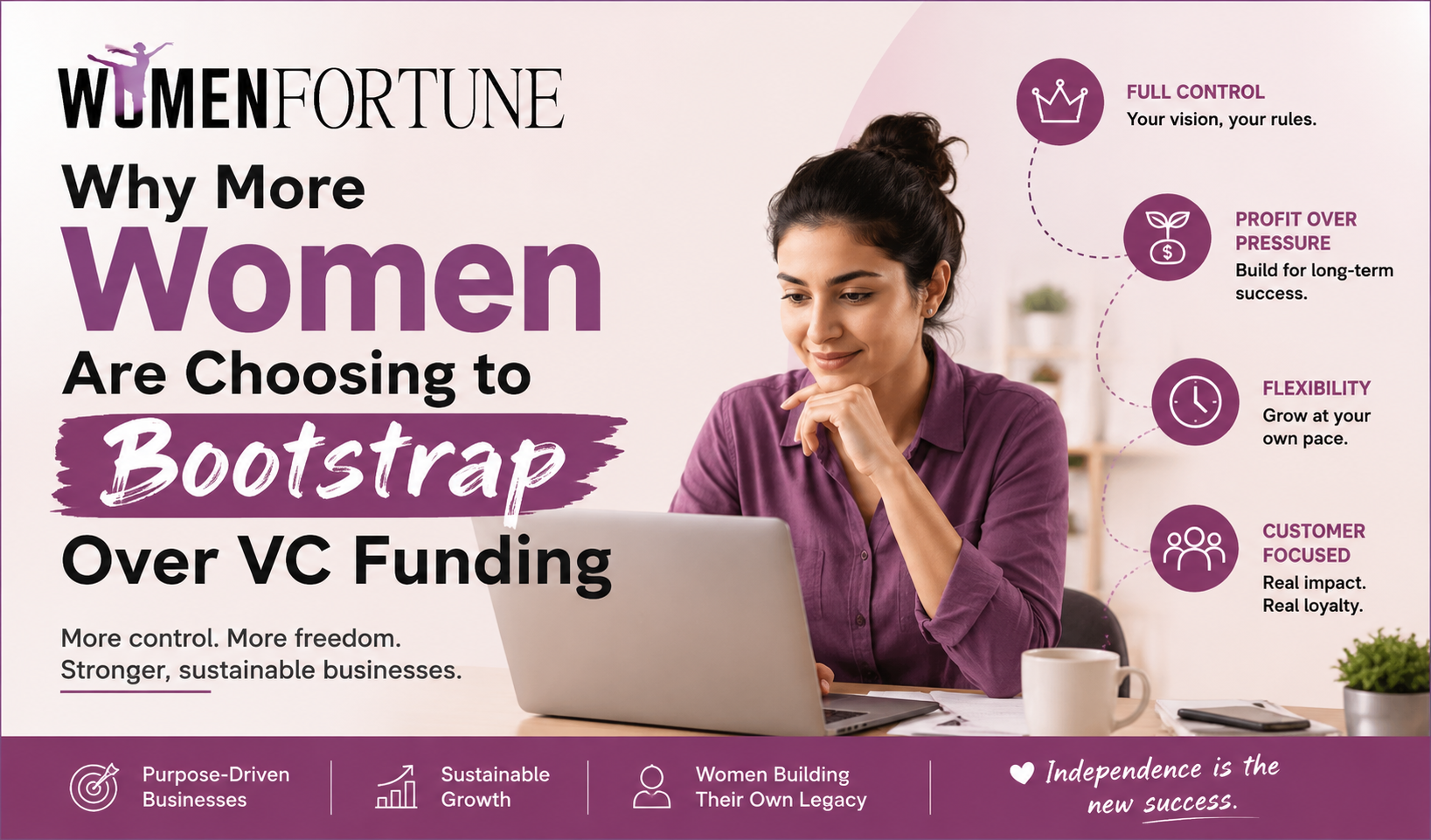
In recent years, a growing number of women entrepreneurs have begun reshaping the startup landscape by choosing to bootstrap their businesses instead of relying on venture capital (VC) funding. While venture capital has long been considered the ultimate pathway to rapid growth and success, many women founders are proving that sustainable, profitable, and impactful businesses can thrive without outside investors. This shift is not simply about avoiding financial dependency; it reflects a deeper transformation in how women approach leadership, ownership, and long-term business strategy.
Bootstrapping, which means building a company using personal savings, business revenue, or minimal external funding, offers entrepreneurs greater control over their vision and operations. For many women founders, this independence is becoming more attractive than the pressure-filled environment often associated with traditional venture capital.
The Challenges Women Face in Venture Capital
One of the biggest reasons women are moving toward bootstrapping is the persistent gender gap in venture capital funding. Despite progress in entrepreneurship, female founders still receive a significantly smaller share of global VC investments compared to male-led startups. Many women entrepreneurs report facing bias during funding pitches, with investors questioning their scalability, leadership abilities, or market understanding more aggressively than their male counterparts.
Studies have shown that women are often asked “risk-focused” questions by investors, while men are more likely to receive “growth-focused” questions. This difference can directly affect funding outcomes. As a result, many talented women founders become frustrated with the fundraising process and decide to build their companies independently instead.
Rather than spending months trying to secure investor approval, women entrepreneurs are increasingly focusing on creating profitable businesses from day one. This approach allows them to prioritize customers and revenue rather than investor expectations.
Greater Control and Ownership
For many women, bootstrapping represents freedom. Venture capital often comes with strings attached, including board control, aggressive growth targets, and pressure to prioritize short-term returns. Bootstrapped businesses, on the other hand, allow founders to maintain complete ownership and decision-making power.
Women entrepreneurs are increasingly valuing this autonomy because it gives them the ability to build businesses aligned with their personal values, lifestyles, and long-term goals. They can choose their company culture, pace of growth, hiring strategy, and product direction without outside interference.
This level of control is especially important for founders who want to create mission-driven brands focused on social impact, sustainability, education, wellness, or community development. Instead of chasing hyper-growth at all costs, bootstrapped women-led companies often focus on building loyal audiences and meaningful customer relationships.
Building Sustainable Businesses
Another major reason women are choosing bootstrapping is the desire to create sustainable and financially healthy businesses. Venture-funded startups are frequently expected to grow rapidly, even if profitability is delayed for years. This “growth at all costs” model can create enormous stress and financial instability.
Many women founders are rejecting this mindset and instead focusing on profitability, resilience, and long-term sustainability. Bootstrapped companies typically operate with leaner budgets, smarter spending habits, and a stronger emphasis on customer satisfaction. Because they rely on revenue rather than investor cash, these businesses are often more disciplined financially.
Women entrepreneurs are proving that slower, intentional growth can lead to lasting success. Instead of burning through millions in funding, they are building companies that generate real value and steady profits over time.
The Rise of Digital Business Models
Technology has made bootstrapping easier than ever before. In the past, launching a business often required large upfront investments for office space, manufacturing, or infrastructure. Today, digital tools and online platforms have significantly lowered the barriers to entry.
Women entrepreneurs can now start businesses from home using e-commerce platforms, social media marketing, remote teams, and affordable software tools. Industries such as digital education, consulting, wellness, fashion, content creation, coaching, and online retail offer low-cost opportunities for scalable growth without major outside investment.
Social media platforms have also empowered women founders to build personal brands and connect directly with customers. Instead of relying on expensive advertising campaigns, many women-led startups grow organically through storytelling, authenticity, and community engagement.
This digital transformation has enabled women entrepreneurs to bootstrap successful global businesses with relatively limited capital.
Work-Life Balance and Flexible Leadership
Many women entrepreneurs are also rethinking what success truly means. Traditional startup culture often glorifies overwork, constant fundraising, and aggressive scaling. However, a growing number of women founders are prioritizing flexibility, mental well-being, and work-life balance.
Bootstrapping offers more flexibility because founders are not constantly pressured by investors demanding rapid expansion or unrealistic timelines. Women entrepreneurs can grow their businesses at a pace that aligns with their personal lives, family responsibilities, and health priorities.
This does not mean bootstrapped founders lack ambition. Instead, they are redefining entrepreneurship in a more balanced and intentional way. Success is no longer measured solely by billion-dollar valuations but also by freedom, impact, profitability, and personal fulfillment.
Stronger Customer-Centered Businesses
Bootstrapped companies often develop a deeper understanding of their customers because they depend directly on customer revenue for survival. Women founders who bootstrap tend to focus heavily on solving real problems, delivering value, and building trust with their audiences.
Without investor pressure to chase vanity metrics or rapid expansion, these businesses can remain closely connected to their communities. This customer-first mindset often leads to stronger brand loyalty and more authentic relationships.
Many successful women-led brands in beauty, wellness, lifestyle, and education have grown primarily through word-of-mouth marketing and loyal online communities rather than massive investor-backed advertising campaigns.
Inspiring a New Generation of Entrepreneurs
The growing success of bootstrapped women entrepreneurs is inspiring a new generation of founders around the world. Women are increasingly seeing that they do not need investor validation to build meaningful and profitable businesses.
This shift is helping change the narrative around entrepreneurship. Instead of viewing venture capital as the only path to success, more founders are embracing alternative business models that prioritize independence, sustainability, and purpose.
Female entrepreneurs are demonstrating that ownership matters, profitability matters, and building at your own pace can be just as powerful as raising millions in funding.
Conclusion
The rise of bootstrapping among women entrepreneurs represents a major shift in the modern business world. Faced with challenges in the venture capital ecosystem, many women are choosing independence, profitability, and long-term sustainability over external funding and rapid scaling pressure.
By leveraging digital tools, focusing on customer relationships, and building purpose-driven brands, women founders are proving that successful businesses do not always require venture capital. Instead, they are creating companies rooted in resilience, authenticity, and freedom.
As more women continue to embrace bootstrapping, they are not only transforming entrepreneurship but also redefining what true business success looks like in the modern era.
Also Read:-
Women of the Year 2026: Inspiring Global Nominees
New Rules Defining Female Entrepreneurship in 2026
Top 10 Billionaire Women CEOs in USA 2026