
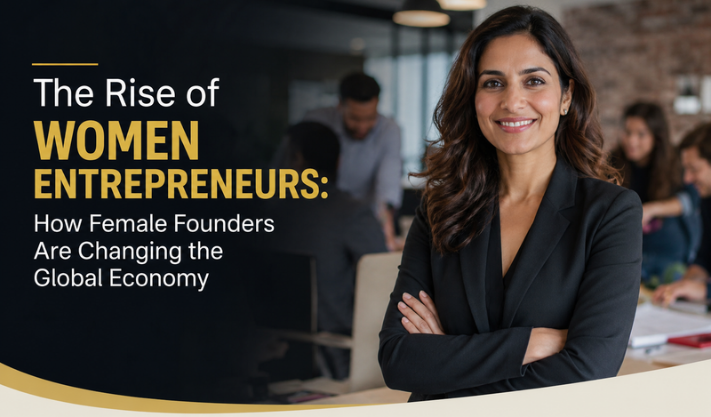
Women entrepreneurs are reshaping the global economy by launching businesses, creating jobs, introducing new products, and bringing fresh perspectives to leadership. From technology startups and financial services to healthcare, retail, sustainability, and social enterprises, female founders are building companies that influence communities and compete in international markets.
But what is driving the rise of women entrepreneurs, and why does female entrepreneurship matter to the future of the global economy? Here are the key questions and answers.
What Is Driving the Rise of Women Entrepreneurs?
The growth of women entrepreneurship is being driven by several factors, including better access to education, digital technology, online markets, professional networks, mentorship, and alternative sources of business financing.
Technology has lowered many traditional barriers to starting a company. A woman with an idea can now build an online business, reach international customers, market through social platforms, and manage operations remotely without requiring a large physical infrastructure.
Economic changes are also encouraging more women to pursue entrepreneurship as a path toward financial independence, professional freedom, and long-term wealth creation.
Why Are Women Entrepreneurs Important to the Global Economy?
Women entrepreneurs contribute to economic growth by creating businesses, generating employment, developing products and services, and expanding consumer markets.
Their impact extends beyond individual companies. Successful female-led businesses can create opportunities for employees, suppliers, investors, freelancers, and local communities. When more women participate in entrepreneurship, economies gain access to a larger pool of talent, ideas, and leadership.
Women founders also frequently identify market opportunities that have historically received less attention, including products and services designed around women’s needs and underserved communities.
How Are Female Founders Changing Traditional Business Leadership?
Female founders are helping redefine what effective leadership looks like. While business leadership has traditionally been associated with hierarchy and authority, many successful entrepreneurs are emphasizing collaboration, adaptability, employee development, customer understanding, and purpose-driven growth.
This does not mean women follow one particular leadership style. Instead, the growing presence of women in entrepreneurship demonstrates that successful leadership can take many forms.
Female founders are also challenging assumptions about who can build high-growth companies, manage large teams, raise capital, and make strategic decisions.
What Industries Are Women Entrepreneurs Transforming?
Women entrepreneurs are active across virtually every major industry.
In technology, female founders are developing solutions in artificial intelligence, software, cybersecurity, fintech, and digital services. In healthcare, women-led companies are addressing areas such as women’s health, biotechnology, wellness, and healthcare access.
Women entrepreneurs are also making an impact in:
- E-commerce and retail
- Financial technology
- Education and professional training
- Sustainability and clean technology
- Food and agriculture
- Media and creative industries
- Real estate
- Professional services
- Healthcare and wellness
- Travel and hospitality
The diversity of these businesses demonstrates that female entrepreneurship is not limited to a particular sector or business model.
How Is Technology Helping Women Start Businesses?
Digital technology has become one of the most powerful tools for modern entrepreneurs.
Social media allows founders to build brands and communicate directly with customers. E-commerce platforms provide access to international markets. Cloud software reduces infrastructure costs, while digital payment systems make transactions easier across borders.
Artificial intelligence is also becoming increasingly useful for entrepreneurs. AI tools can support market research, content creation, customer service, data analysis, financial forecasting, and administrative tasks.
For women entrepreneurs who may face limitations in traditional business networks or funding systems, digital platforms can create new pathways to customers, knowledge, and professional communities.
What Challenges Do Women Entrepreneurs Still Face?
Despite significant progress, women founders continue to encounter challenges.
Access to capital remains one of the most frequently discussed barriers. Female entrepreneurs can face difficulties securing investment, loans, and other forms of business financing. Networking opportunities and access to experienced mentors can also be uneven.
Other challenges include balancing business responsibilities with personal commitments, navigating industries where women remain underrepresented, overcoming stereotypes, and gaining visibility in competitive markets.
These barriers do not reflect a lack of entrepreneurial ability. Instead, they highlight areas where business ecosystems can become more inclusive.
Why Is Access to Funding Important for Female Founders?
Funding can determine how quickly a startup develops its product, hires employees, enters new markets, and scales operations.
When promising women-led businesses cannot access adequate capital, the wider economy may lose potential innovation and job creation. Increasing access to funding for female founders is therefore not simply a diversity issue; it can also be an economic growth opportunity.
Banks, venture capital firms, angel investors, governments, and development organizations can all contribute by improving access to transparent financing opportunities and evaluating businesses based on their potential rather than outdated assumptions.
How Can Mentorship Help Women Entrepreneurs Succeed?
Mentorship can provide entrepreneurs with practical knowledge that is difficult to gain from textbooks or online courses alone.
Experienced mentors can help founders understand fundraising, hiring, sales, negotiation, leadership, business strategy, and expansion. They can also provide introductions to investors, customers, partners, and other entrepreneurs.
Strong professional networks can be particularly valuable for women entering industries where established networks have historically been dominated by men.
Are Women Entrepreneurs Creating More Than Businesses?
Yes. Many female founders are building businesses while also addressing broader social and economic challenges.
Women-led companies are increasingly involved in sustainability, education, healthcare access, financial inclusion, employment opportunities, and community development. Some entrepreneurs are deliberately designing businesses around measurable social or environmental outcomes.
This combination of commercial ambition and social impact is helping expand the definition of entrepreneurial success.
How Does Female Entrepreneurship Benefit Future Generations?
The success of women entrepreneurs can have a powerful demonstration effect.
When young women see female founders building companies, leading teams, raising investment, and entering traditionally male-dominated industries, entrepreneurship becomes more visible as a realistic career path.
Successful entrepreneurs can also become mentors, investors, educators, and role models for the next generation. This creates a cycle in which greater representation encourages greater participation.
What Does the Future Look Like for Women Entrepreneurs?
The future of women entrepreneurship is likely to be shaped by technology, global connectivity, changing consumer behavior, and broader access to business resources.
AI-powered tools, remote work, digital finance, e-commerce, and international networking are creating new opportunities for entrepreneurs to build companies from almost anywhere.
However, opportunity alone is not enough. Continued progress will require stronger access to capital, mentorship, education, professional networks, and supportive policies.
Why Does the Rise of Women Entrepreneurs Matter Now?
The rise of women entrepreneurs represents a broader transformation in the global economy. As more women move from being participants in established organizations to founders and business leaders, they are influencing what gets built, who gets served, and how companies operate.
Female entrepreneurship is therefore not simply a trend. It is an important part of economic development and innovation.
The global economy benefits when talented people have the opportunity to turn ideas into businesses regardless of gender. As barriers continue to fall and access to technology and capital expands, women entrepreneurs will play an increasingly important role in creating jobs, developing new markets, solving complex problems, and shaping the businesses of tomorrow.
Also Read:-
Best Ways to Empower Women and Girls | Equality & Opportunity
How Women’s Empowerment Strengthens Families and Communities
How Women Can Overcome Challenges and Build a Bright Future