
Table of Contents
ToggleWhy do many women struggle to identify perimenopause symptoms?
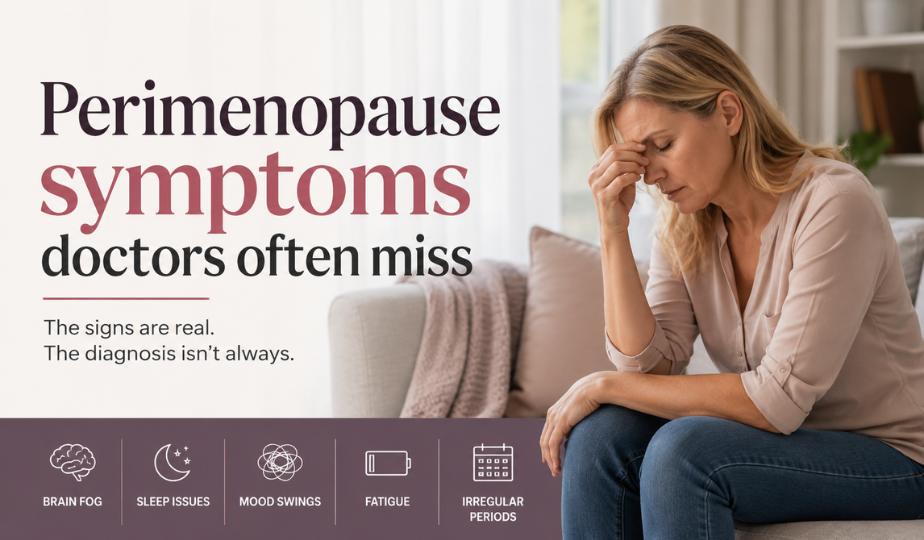
Perimenopause is a natural transition period that occurs before menopause, but many women spend years experiencing changes without realizing the cause. While common symptoms like hot flashes and irregular periods are widely recognized, many other signs are subtle, confusing, or often mistaken for stress, aging, or unrelated health concerns.
This stage can begin during a woman’s 30s or 40s and may continue for several years before menopause officially begins. Since symptoms can develop gradually and differ from one person to another, many signs are overlooked during medical consultations.
Understanding the lesser-known symptoms of perimenopause can help women recognize changes earlier, seek proper guidance, and make informed decisions about their health.
What Is Perimenopause?
How does perimenopause affect the body?
Perimenopause is the transitional phase when the body gradually produces lower and fluctuating levels of reproductive hormones, especially estrogen and progesterone. These hormonal changes can affect multiple areas of health, including menstrual cycles, mood, sleep, metabolism, brain function, and overall well-being.
Unlike menopause, which is officially confirmed after 12 consecutive months without a menstrual period, perimenopause can involve several years of hormonal changes and unpredictable symptoms.
Frequently Asked Questions About Perimenopause Symptoms Doctors Often Miss
What are the most commonly missed symptoms of perimenopause?
Many healthcare discussions focus mainly on hot flashes and changes in periods, but perimenopause can cause a much wider range of symptoms that are frequently overlooked.
Commonly missed symptoms include:
- Brain fog and memory difficulties
- Anxiety and sudden mood changes
- Sleep problems
- Joint and muscle discomfort
- Weight gain and body composition changes
- Increased sensitivity to stress
- Low energy levels
- Changes in skin, hair, and nails
- Heart palpitations
- Reduced sexual desire
Because these symptoms can appear similar to other health conditions, they are not always immediately connected to hormonal changes.
Can brain fog be a sign of perimenopause?
Yes, brain fog is one of the most frequently overlooked symptoms of perimenopause. Many women report experiencing:
- Forgetfulness
- Difficulty concentrating
- Trouble finding the right words
- Problems multitasking
- Feeling mentally slower than usual
Changes in estrogen levels can influence areas of the brain involved in memory, focus, and emotional regulation. While these changes can feel concerning, hormonal fluctuations may play an important role.
If memory problems become severe or interfere with everyday activities, consulting a healthcare professional is recommended.
Why do doctors sometimes miss anxiety and mood changes during perimenopause?
Mood changes during perimenopause can sometimes be confused with stress, depression, or anxiety disorders. Hormonal fluctuations may influence neurotransmitters such as serotonin, which help regulate emotions.
Women may experience:
- Increased irritability
- Sudden sadness
- Unexplained anxiety
- Emotional sensitivity
- Feeling overwhelmed by normal situations
Even women who have never experienced major mood changes before may notice emotional shifts during this stage.
Are sleep problems related to perimenopause?
Yes, sleep disruption is a common but often underrecognized symptom of perimenopause. Women may experience:
- Difficulty falling asleep
- Frequent waking during the night
- Waking earlier than usual
- Night sweats
- Feeling tired despite getting enough sleep
Lower progesterone levels may affect relaxation and sleep quality, while changing estrogen levels can influence temperature regulation. Poor sleep can also increase fatigue, mood changes, and memory difficulties.
Can perimenopause cause weight gain without lifestyle changes?
Yes, hormonal changes during perimenopause can influence metabolism and body composition. Many women notice:
- Increased belly fat
- Difficulty losing weight
- Changes in muscle mass
- Increased cravings
- A slower metabolism
Lower estrogen levels can affect fat storage and how the body uses energy. However, weight changes may also be influenced by diet, physical activity, stress, sleep quality, and other health factors.
Are joint pains and body aches signs of perimenopause?
Yes, joint and muscle discomfort can be connected to hormonal changes, but this symptom is often overlooked.
Estrogen supports healthy joints, muscles, and inflammation regulation. When estrogen levels fluctuate, some women may experience:
- Morning stiffness
- Aching knees, shoulders, or hands
- Muscle soreness
- Reduced physical comfort
These symptoms are sometimes incorrectly considered a normal part of aging or exercise-related discomfort.
Can heart palpitations happen during perimenopause?
Yes, some women experience heart palpitations during perimenopause. These sensations may include:
- A racing heartbeat
- Skipped beats
- A fluttering feeling in the chest
- Sudden increases in heart rate
Hormonal changes can affect the nervous system and stress response, which may contribute to these experiences. However, persistent or severe heart symptoms should always be discussed with a healthcare professional.
Why are menstrual cycle changes important during perimenopause?
Changes in menstrual cycles are among the earliest signs of perimenopause. However, these changes can vary significantly between women.
Possible changes include:
- Shorter or longer cycles
- Heavier bleeding
- Lighter periods
- Missed periods
- Stronger premenstrual symptoms
These changes occur because hormone levels become less predictable as ovarian function gradually changes.
Any unusually heavy bleeding or concerning menstrual changes should be medically evaluated.
Can perimenopause affect mental health?
Yes, perimenopause can have a noticeable impact on emotional well-being. Hormonal changes may contribute to:
- Increased stress sensitivity
- Mood swings
- Lower confidence
- Feelings of sadness
- Changes in emotional resilience
Women with a history of anxiety, depression, or severe premenstrual symptoms may experience stronger emotional changes during this transition.
Lifestyle adjustments, professional support, and healthy coping strategies can help manage these challenges.
What symptoms should women discuss with a doctor?
Women should consider speaking with a healthcare professional about:
- New or unusual symptoms
- Severe mood changes
- Heavy or irregular bleeding
- Persistent fatigue
- Sleep problems affecting daily life
- Significant weight changes
- Ongoing pain
- Symptoms affecting work or relationships
A healthcare provider may review symptoms, medical history, and possible causes before suggesting appropriate support.
How Can Women Manage Perimenopause Symptoms Naturally?
What lifestyle habits may support better health during perimenopause?
Every woman’s experience with perimenopause is different, but healthy habits can support physical and emotional well-being.
Maintaining a Balanced Diet
Eating enough protein, vegetables, healthy fats, and nutrient-rich foods can support energy levels, metabolism, and overall health.
Exercising Regularly
Strength training, walking, yoga, and other forms of movement may help support muscle strength, mood balance, and better sleep.
Prioritizing Sleep
Creating consistent sleep routines, reducing screen exposure before bedtime, and managing stress can improve sleep quality.
Managing Stress
Meditation, breathing exercises, hobbies, and strong social connections may help support emotional balance.
Tracking Symptoms
Keeping a record of periods, mood changes, sleep patterns, and physical symptoms can help identify patterns and create more productive conversations with healthcare providers.
Why Awareness of Hidden Perimenopause Symptoms Matters
How can understanding overlooked symptoms help women?
Perimenopause is not only about hot flashes and missed periods. Many women experience changes that affect their energy, emotions, mental clarity, and physical health.
Recognizing hidden symptoms can help women understand their bodies, seek support earlier, and receive better healthcare guidance. Greater awareness also encourages healthcare providers to consider hormonal changes when evaluating symptoms.
Every woman’s perimenopause experience is unique. Paying attention to body changes, tracking symptoms, and having informed conversations with healthcare professionals can make this transition easier and more manageable.
Quick Answers: Perimenopause Symptoms Doctors Often Miss
What is the biggest hidden sign of perimenopause?
Brain fog, mood changes, sleep problems, and unexplained physical changes are among the most commonly overlooked signs of perimenopause.
Can perimenopause start before age 40?
Yes, some women begin experiencing perimenopause symptoms in their late 30s.
How long does perimenopause last?
Perimenopause can last several years, and symptoms may change throughout the transition period.
Are anxiety and fatigue normal during perimenopause?
Yes, hormonal changes can contribute to anxiety and fatigue, although other possible causes should also be considered.
When should women seek medical advice?
Women should consult a healthcare professional about severe, sudden, or disruptive symptoms, especially unusual bleeding or major health changes.
Also Read:-
The Future Is Female Leadership: Inspiring Global Change
Empowering Every Woman’s Journey
Setting boundaries at work without burning bridges