
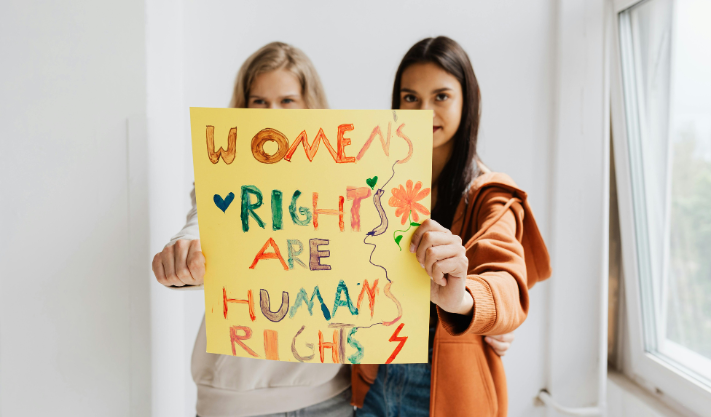
Women’s rights remain one of the most pressing and complex issues of our time. Across the globe, the status of women varies dramatically — from nations that have achieved near-parity in political representation and legal protections, to countries where women are still denied basic freedoms such as the right to education, travel, or bodily autonomy. This report examines the state of women’s rights in key regions and countries, highlighting progress made, ongoing struggles, and the road ahead.
United States of America
The United States has long been considered a global leader in gender equality, yet significant challenges persist.
- Reproductive Rights: The 2022 Supreme Court ruling in Dobbs v. Jackson Women’s Health Organization overturned Roe v. Wade, eliminating the constitutional right to abortion. As a result, more than a dozen states have enacted near-total abortion bans, while others have expanded protections.
- Workplace Equality: Women earn approximately 82 cents for every dollar earned by men. Women of color face an even wider wage gap, with Black women earning around 63 cents and Hispanic women around 55 cents compared to white male counterparts.
- Political Representation: The 118th Congress includes a record number of women — 153 women — yet women still hold only about 28% of seats in Congress, far below proportional representation.
- Violence Against Women: Domestic violence and sexual assault remain widespread, with one in three women experiencing intimate partner violence in their lifetime.
Saudi Arabia
Saudi Arabia has historically been one of the most restrictive countries for women, though recent reforms have begun to shift the landscape.
-
- Driving Rights: Women were granted the legal right to drive only in 2018, marking a significant but long-overdue reform.
- Guardianship System: While Saudi Arabia has loosened parts of the mahram (male guardianship) system — allowing women over 21 to obtain passports and travel independently — men still retain authority over key decisions in some legal and family contexts.
- Employment: Vision 2030 has pushed female workforce participation from around 17% to over 30% in recent years, with women increasingly entering sectors like tourism, entertainment, and business.
India
India presents a sharp paradox — a country with a female president and prime ministers in its history, yet one where women face extreme gender-based violence and systemic inequality.
- Violence and Safety: India recorded over 31,000 rape cases in 2022 alone, and crimes against women — including acid attacks, dowry deaths, and honour killings — remain alarmingly high.
- Child Marriage: Despite being illegal, child marriage affects approximately 23% of girls in India, with the highest rates found in states like Bihar, Rajasthan, and West Bengal.
- Education: Literacy rates for women have improved substantially, rising to around 70%, but rural girls still face significant barriers to secondary and higher education.
- Legal Protections: India has robust laws on paper — including the Protection of Women from Domestic Violence Act and the Sexual Harassment of Women at Workplace Act — but enforcement remains inconsistent and access to justice limited for marginalised women.
- Political Participation: Women constitute only about 15% of the Lok Sabha (lower house of Parliament), though the Women’s Reservation Bill passed in 2023 aims to reserve 33% of parliamentary seats for women once delimitation is carried out.
Afghanistan
Afghanistan represents one of the most severe and rapidly deteriorating situations for women’s rights anywhere in the world.
- Education Ban: Since the Taliban’s return to power in August 2021, girls above sixth grade have been banned from attending school, and women have been prohibited from attending universities — making Afghanistan the only country in the world to formally ban women from higher education.
- Employment: Women have been barred from most forms of employment, including working for NGOs and the United Nations, cutting off millions of women from economic independence and critical humanitarian work.
- Freedom of Movement: Women are required to be accompanied by a male guardian in most public spaces and are banned from parks, gyms, and public baths.
- Healthcare: Female patients face severe restrictions on accessing healthcare, as male doctors are often prohibited from treating women without a male guardian present, and female healthcare workers face barriers to working.
- International Response: The UN and multiple nations have condemned Afghanistan’s treatment of women as a form of “gender apartheid,” calling for accountability mechanisms under international law.
Scandinavia (Norway, Sweden, Iceland, Finland, Denmark)
The Nordic countries consistently rank highest in global gender equality indices and serve as benchmarks for women’s rights worldwide.
- Political Representation: Iceland, Sweden, and Finland have all elected female heads of government. Women hold between 40–50% of parliamentary seats across the region.
- Pay Equity: Iceland became the first country in the world to legally mandate equal pay for equal work in 2018, requiring companies to certify their pay practices.
- Parental Leave: Generous, shared parental leave policies — including dedicated paternity leave — have helped reduce the domestic burden on women and encourage greater male participation in childcare.
- Violence Against Women: Despite high equality rankings, domestic violence remains a concern, with Nordic countries actively implementing comprehensive national action plans.
- Reproductive Autonomy: All Nordic countries guarantee safe, legal access to abortion, generally up to 12–18 weeks of pregnancy, with broader access available on medical or social grounds.
Iran
Women in Iran have increasingly resisted systemic oppression, most visibly through the Zan, Zendegi, Azadi (“Woman, Life, Freedom”) uprising of 2022–2023.
- Mandatory Hijab: Women are legally required to wear the hijab in public. The death of Mahsa Amini in September 2022 — after her arrest by the “morality police” — triggered massive nationwide protests.
- Legal Discrimination: Under Iranian law, a woman’s testimony in court is worth half that of a man’s; women are entitled to half the inheritance of their male counterparts.
- Marriage Laws: Girls can be legally married at age 13 with a father’s consent, and as young as 9 in some interpretations of Islamic law applied by courts.
- Travel and Employment: Women require a husband’s permission to obtain a passport and travel abroad. Despite these restrictions, Iranian women have high literacy rates and constitute a significant proportion of university students.
- Crackdown on Protests: Hundreds of protesters — including women — were killed, thousands arrested, and several executed following the 2022 uprising.
Rwanda
Rwanda stands out as a remarkable example of women’s political empowerment, particularly in the aftermath of the 1994 genocide.
- Political Representation: Rwanda has the highest proportion of women in parliament of any country in the world — approximately 61% of the lower chamber seats are held by women.
- Legal Reforms: Rwanda has enacted strong laws against gender-based violence, sexual harassment, and discrimination in property and inheritance rights.
- Economic Inclusion: Women are actively integrated into Rwanda’s economic development agenda, with growing representation in business and the public sector.
- Persistent Gaps: Despite legal protections, cultural norms and economic inequalities mean that rural women still face barriers in accessing justice, land rights, and healthcare.
Brazil
Brazil is the largest country in Latin America and reflects the region’s complex, often contradictory relationship with women’s rights.
- Femicide: Brazil has one of the highest femicide rates in the world. In 2022, a woman was killed every six hours due to gender-based violence, according to official data.
- Reproductive Rights: Abortion is largely illegal in Brazil except in cases of rape, risk to the mother’s life, or anencephalic foetuses — a deeply contested issue with ongoing legislative battles to further restrict access.
- Political Gains: Luiz Inácio Lula da Silva’s return to power saw the appointment of Brazil’s most gender-diverse cabinet ever, with women heading several key ministries.
- Racial Inequality: Black Brazilian women face compounded discrimination — higher rates of violence, lower wages, and reduced access to healthcare compared to white women.
Global Overview and Conclusion
The state of women’s rights around the world is one of profound inequality. According to the World Economic Forum’s Global Gender Gap Report 2023, at the current rate of progress, it will take approximately 131 years to achieve full gender parity globally. The gaps are widest in economic participation and political empowerment.
Key themes that emerge across all countries include:
- Legal frameworks alone are insufficient — laws must be enforced, and cultural and institutional norms must change.
- Intersectionality matters — women’s experiences are shaped not only by gender but by race, class, religion, disability, and geography.
- Civil society and activism are vital — from the women of Iran and Afghanistan risking their lives to protest, to grassroots movements in India and the United States, women-led activism continues to drive change.
- Economic empowerment is foundational — financial independence is closely tied to women’s ability to escape violence, access education, and participate in public life.
No country in the world has yet achieved full gender equality. But the gaps between the most and least equal nations are stark, and the urgency of the issue demands political will, investment, and genuine accountability, not just rhetoric.
Also Read:-
Top Must-Read Books for Every Ambitious Woman Today
Women Who Left Corporate
Learning a Skill in 30 Days: Women Share Stories Real Women!